At a Glance
Most companies have more client proof than they realise. It is usually scattered across inboxes, renewals and referral conversations rather than organised as marketing content.
Buyers look for that evidence before they ever speak to you, so the useful move is to inventory what exists, draft from it, and then ask the client to check it.
Case studies are one of those marketing assets everyone agrees they need and somehow nobody has time to create.
The usual process sounds reasonable. Marketing asks the team for a few great client examples. Someone promises to think about it. A couple of names get mentioned. Then everyone gets busy, nobody wants to bother the client, and six weeks later the case-study section of the website still has the same three stories it had last year.
I was in a version of that conversation this week. The team wanted more proof for upcoming marketing work, but getting people to nominate case-study candidates had stalled. My suggestion was simple: stop treating the case study as something that has to begin with a blank page and a 45-minute client interview.
Start with the proof you already have.
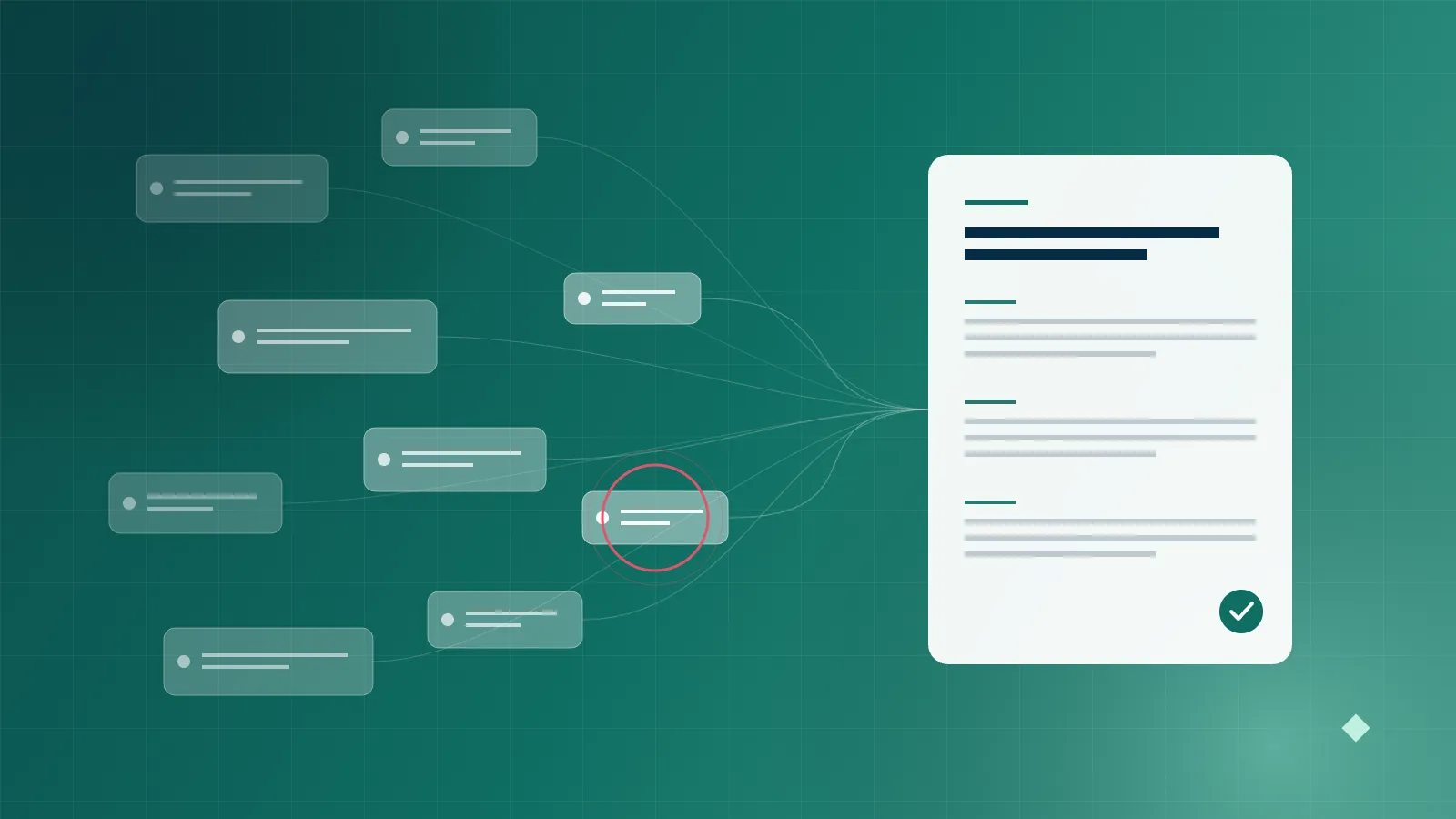
That might be a testimonial, a Google review, a client email, a sales note, a completed project summary, a quote from a webinar, or a relationship the team already knows has a strong story behind it. Use what is already there to build the first draft, then ask the client to validate it, add detail, and approve what can be shared.
For many B2B companies, that small process change can turn case studies from an occasional special project into a repeatable source of proof.
Buyers are looking for proof before they talk to you
The need for credible client evidence is getting stronger as more B2B research happens before a salesperson ever enters the conversation. A 2026 SurveyMonkey and Reddit study of 1,202 U.S. business decision-makers put some numbers behind it.
83%
conduct their own research before speaking with sales
37%
of professional services buyers say research stretches several weeks to a month or more
48%
struggle to find real user testimonials
73%
trust peer recommendations more than vendor websites, search, review sites, AI chatbots, or social
That is a useful reminder for expertise-driven firms. Buyers do not only need you to say that you are experienced, responsive, strategic, specialized, or easy to work with. They are looking for signals that someone else has experienced those things.
Your proof is probably scattered across the business
Most companies have more client proof than they realize. It is just not organized as marketing content.
A project manager knows about the client that came in with a messy process and now has something much more manageable. An owner remembers the relationship that has lasted 12 years. A salesperson has an email from a prospect who chose the firm because the team understood the industry immediately. Someone in customer service has a message thanking the team for solving a problem quickly. An executive has a client quote from a webinar or event that never made it onto the website.
None of those are automatically case studies. They are starting points. A simple proof inventory can include:
- Testimonials
- Reviews
- Praise buried in email
- Renewal or expansion stories
- Before-and-after data
- Unusual client situations
- Long-term relationships
- Referral stories
- Event feedback
- Why the firm was chosen
The marketing opportunity is to turn those fragments into something useful without overstating what happened.
Draft first, then interview
I think the biggest process improvement is doing more homework before asking the client for time.
Instead of sending a vague email that says, “Would you be willing to participate in a case study?“, build what you can first. Pull the basic company context. Review the project notes. Capture the problem the client was trying to solve. Identify the work that was done. Gather any outcomes you can substantiate. Note the gaps that still need the client’s perspective.
Then the request becomes much easier:
“We drafted a short story based on the work we did together. Could we have 20 minutes to make sure we have it right and fill in a few details?”
That is a smaller ask. It also signals that you value the client’s time and are not expecting them to create your marketing content for you.
A good case study does not need a giant result
One reason teams struggle to find candidates is that they are searching only for dramatic transformation stories. Revenue doubled. Costs fell 40%. A transaction closed at a record multiple. The project saved millions. Those stories are great when they are real and approved.
They are not the only proof buyers care about.
A useful case study can show how a difficult decision was made, how a process became easier, how a team gained clarity, how a risk was avoided, how an implementation stayed on track, how a leadership team got better information, or how a long-standing relationship evolved as the client’s needs changed.
The 2025 Edelman-LinkedIn B2B Thought Leadership Impact Report found that hidden decision-makers place especially high value on whether a vendor understands their business challenges and is a leading expert in the relevant area. A case study can demonstrate both if it explains the situation with enough specificity. A generic quote saying “Great team, highly recommend” cannot do much of that work.
Use more than one case-study format
Another thing that makes case-study programs harder than they need to be is assuming every story has to become a 900-word page with a polished client interview and a designed PDF.
I would rather build a proof library with different levels of depth.
Format 01
Proof snippet
Two or three sentences that connect a client situation, the work, and the outcome. Useful on service pages and sales materials.
Format 02
Client quote with context
A testimonial that explains what the client was dealing with when they hired you, rather than presenting the quote by itself.
Format 03
Mini case study
A short challenge-approach-result story that can live in an article, proposal, email, or industry page.
Format 04
Full case study
A deeper story with client perspective, specific decisions, outcomes, and enough context to help a similar buyer see themselves in it.
Not every customer needs to agree to the biggest version. Sometimes a short attributed quote is enough. Sometimes the client will approve an anonymized story. Sometimes the right proof is a 30-second video clip, a webinar excerpt, or a one-paragraph story inside a proposal.
Build the process into normal client work
The easiest time to identify a good case study is usually not six months after a project ends. It is when the positive signal happens.
When a client sends a strong email, put it in a proof tracker. When a project hits an important milestone, note the before-and-after. When a client expands the relationship, ask what changed. When a webinar goes well, capture the feedback. When a customer gives a useful review, flag it for follow-up. When a team member says, “This would make a great story,” give that observation somewhere to go.
You can make the system very simple. Track seven things, review it once a month, and choose the stories worth developing.
- Client
- Situation
- Service
- Outcome
- Available evidence
- Permission status
- Next step
The goal is not more content. It is more evidence.
Case studies work because they make a company’s claims less abstract. They show what expertise looks like in a real situation. They help a buyer understand whether you have seen a problem like theirs before and how you think when the work gets complicated.
That is especially useful for B2B firms selling judgment, experience, and trust. Those things are hard to communicate with a services list alone.
So if your case-study program has been stuck waiting for the perfect client, the perfect result, or the perfect interview, start smaller. Find the proof that already exists. Draft the story you can substantiate. Ask the client to help you make it accurate and useful.
The bottom line
You may already have more of the story than you think.
Current references: SurveyMonkey + Reddit: The Hidden B2B Journey (2026); Edelman + LinkedIn: 2025 B2B Thought Leadership Impact Report.
Key Takeaways
- Take an inventory of the proof you already have before commissioning anything new.
- Draft the story first, then ask the client to correct it. The request gets much easier to say yes to.
- A case study does not need a dramatic number to be persuasive.
- Use formats smaller than a full case study: proof snippets, quotes with context, mini stories.
- Capture proof during normal client work rather than hunting for it later.
- Track client, situation, service, outcome and available evidence in one simple place.